The Un-Apologetics of a Relational God
The problem of omnipotence, or the state of having ultimate power, has been a criticism against astrology for millennia. Beginning with Justin Martyr in the second century CE and solidified by Augustine in his Confessions, God’s omnipotence is one of two core arguments that have been used consistently by the Church to argue why astrology is either sinful or counter to a divinely created cosmos (the other core argument being astrology absolves human responsibility, which we’ll return to). (Campion, Astrology & Cosmology, p. 168-169)
However, I’d like to suggest that astrology is not the problem in this equation. On the contrary, it is our understanding of omnipotence that needs to be turned and understood more holistically. By doing this, we may start to see that astrology actually reflects the omnipotence of the Divine.
The modern imagination equates ‘ultimate power’ with domination or control, and there are historical reasons for this which we’ll explore. But when understood both historically and theologically, power can also include restraint, invitation, self-limitation, and the capacity to generate relationships. This fundamentally changes how omnipotence can be understood and therefore, how it engages with paradigms like astrology.
To be clear, while this article is written with these two particular groups in mind, it also speaks to how we all view the nature of power. So even if you do not identify as either an astrologer or a Christian, I invite you to consider what power looks like to you, and in turn, how it has shaped your understanding of what Love, Truth, and Beauty looks like. Because ultimately, “ultimate power” shouldn’t be a scary monster in the closet threatening us into staying in bed with the lights off.
I’ve said as much to clients in my counseling practice, but I think it also applies here: “If you want to get rid of the monster in the closet, turn on the light.”
The Two Faces of Power
When we think of unlimited power, we associate this with an authority figure’s ability to do or decide anything—to create, change, or destroy at any given time. This was the main beef anti-astrological polemics centered on: the future can’t be predicted because God has the ultimate power to change it at any moment. (Campion, History, Vol II, p. 252, 284)
However, power is not only an outward-facing action or state of being. Power is also inward-facing. Essentially, ultimate power can be unilateral action but it also includes the choice to relinquish that decision-making or creative capacity to someone else. Let me give you an example.
Consider the “power” of the social-political strategy of non-violence and how much these movements have achieved that hundreds of years of outward-facing “power” could not quell. The emphasis of non-violence is not an outward assertion of force but an inward pull into dialogue. Make no mistake—it is still “active” resistance, meaning, it is not passive and it is not surrendering in defeat. Rather, the power in non-violence lies in its ability to ‘win over’ the other side by relinquishing physical force and enacting invitation instead.

With this understanding, I suggest that within the Christian paradigm, Christ’s death was a demonstration of omnipotence just as much as the Creation Story. In a prior article about ‘The 7 Sayings of Jesus’ and its correlation to Plato’s celestial spheres, I pointed out one of Jesus’ sayings to a criminal crucified next to him that he would be in paradise with him that day. This conversation came as the result of others’ mockery. They insisted that if Jesus was truly the Messiah and really was powerful enough to destroy the temple and rebuild it in 3 days, then He should have the power to save himself. (NIV, Matthew 27:40; Luke 23:35-39) Their expectation was an outward-facing show of power but what Jesus demonstrated was the inward-facing kind.
This inward-facing side of power is also the basis for other Biblical concepts like intercessionary prayer and grace which necessitate an omnipotent God who is capable of having His mind changed by an outside source. This requires the “surrender” of a decision—again, not in defeat—but for the purpose of dialogue and relationship.
We can already start to see that astrology only becomes threatening when Divine power is imagined solely in a controlling and overriding sense—what I’m calling outward-facing omnipotence. This association between power and domination didn’t spring out of nowhere, but we need to go waaay back to see how this idea might have evolved historically.
How Power Became Domination
Looking beyond—or better said, before—Christianity for a moment, this inward-facing version of power can be seen in the dynamic prehistoric shift from matriarchal to patriarchal societies. Prior to about 4000-3000 BCE, humans were in egalitarian groups focused on shared power. Religiously, they appeared to be much more focused on goddess images which were linked to fertility and perpetuating the power of life. (Baigent, p. 29-30) A distinctive feature was the lack of hierarchy and an alignment with rhythms of the Earth and cosmos. (Willis & Curry, p. 20-21) By the onset of the Bronze Age, this shifted. Groups started to vie for resources and resorted to conquering one another in an outward-facing show of power.
Something interesting happened during this process. Whenever a group would conquer another group, they brought together each groups’ gods, creating a multi-layered pantheon. However, it was believed that the god of the conquerors must be the “more powerful” god, otherwise why would the subjugated group’s god allow such a thing? Said differently, “If you are so powerful why don’t you save yourself?”
Thus, with each new change of power, the subjugated gods and the feminine goddesses as a whole were placed under the rulership of the “more powerful” god. (This was also eventually reflected astrologically with the Moon subjugated to the Sun). As the pantheon slowly morphed into a unified body (i.e. the Cosmic Man, etc.), the “more powerful” god was placed at the head of the body.
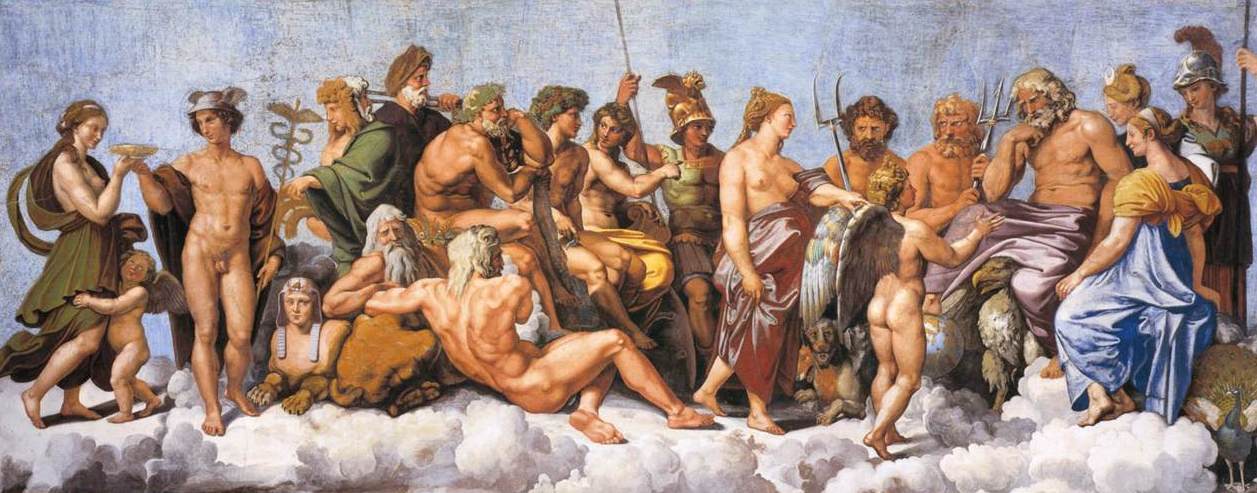
Thus, social stratification and the development of “the state” was mirrored in the “temple”. This shift can be seen in myths all around the world as a reflection of global collective consciousness. (Willis & Curry, p. 21, 23) Thomas McEvilley describes this centrifugal pull within religious beliefs of the Fertile Crescent (also the birthplace of Judaism and forerunner of Christianity):
“Bronze Age mythology ended when the pantheons of separate gods and goddesses, each with his or her special attributes, adventures, and cults, dissolved into pantheism—the deification of the universe as a single vast metadeity or “everything-god” (pantheos). This preoccupation was in part a by-product of political amalgamations. When power shifted, the priests of the newly dominant group would compose a theology which elevated their god over those of the dominated groups. At such a moment, a Mesopotamian priesthood would imitate the model of the state, declaring that its god was king of the other gods; by contrast, the more metaphysically inclined Egyptians were apt to declare that the newly dominant deity had absorbed the other gods into himself or become them.” (The Shape of Ancient Thought, p. 24)
And so, an “all-powerful” god became associated with physical force, dominance, and assertion — one that could conquer one’s enemies. However, while the all-powerful goddesses were certainly subjugated (i.e. which I’m choosing here to broadly represent reflections of inward-facing power—there were absolutely goddess warriors), I suggest that they did not inherently lose their manifest power.
I say this because we still bend a knee today to the necessity of inward-facing power, seen in the act of “surrender” as a necessary element of continuing life. For example, a seed splits open and a caterpillar dissolves inside its chrysalis, surrendering their original forms to turn into something new. A mother in labor will progress more when she stops resisting contractions, surrenders control, and works with them to birth her creation.
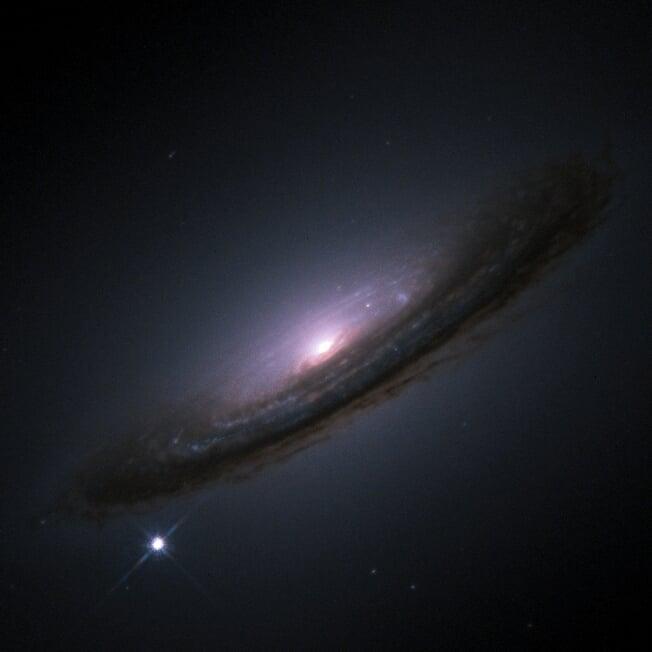
These acts of “surrender” reveal a deeper form of power that domination cannot show us. Ultimately, these inward-facing acts cannot be stopped. Even if you try, the ultimate “surrender” (i.e. death) still prevails. Both Earthly decomposing organic matter and heavenly stars mirror this ultimate surrender into decay or collapse, followed by regeneration into fertile soil and supernovas.
Hence, inward-facing power was not destroyed but came to be known as something else.
Actuality and Potentiality
Now that we have expanded our understanding of the nature of omnipotence, we need to consider how and why God demonstrates omnipotence. If we lean into this dual paradigm of ‘ultimate power’, we can better see why God’s “all-powerful” nature is not superseded or threatened by paradigms like astrology and instead works with it.
Consider this: God’s all-powerful ability to make a decision to create, change, or destroy necessitates the ability to not make that decision or to make another decision altogether. This might sound obvious but we must follow this logic through to understand the significance.
Using an analogy, you cannot be going down on the Titanic and decide to sink. That’s not a decision but an actuality, a fact, or a state of being. It just is. You are sinking, and there is no decision to enact. A decision, therefore, requires more than one potential outcome. What this implies is that an omnipotent deity’s ability to do or decide any one thing, necessitates that there must be a choice to enact other outcomes, otherwise it is just an actuality. Demonstrating omnipotence requires possibility and potentiality.
Why does that matter?
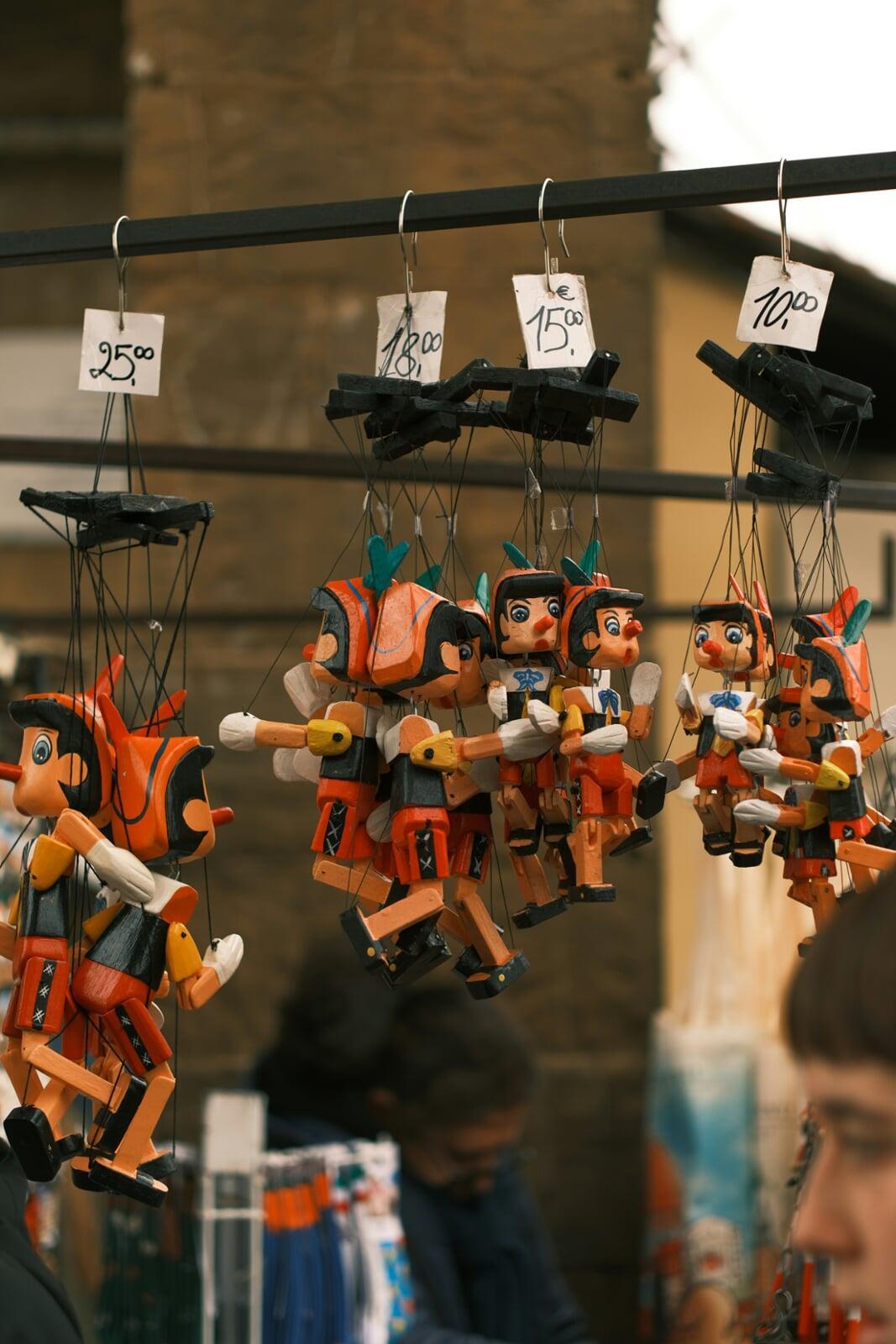
Looking from the Christian paradigm, it is God’s decision to grant free will that establishes possibility and creates the stage for God’s (inward-facing) omnipotence. God’s alternative decision would have been total determinism and if the cosmos was composed of puppets, how would God enact God’s inward-facing omnipotence (i.e. surrender and invitation) upon a Creation that cannot make a decision to receive it? It is because a totally deterministic Creation renders no relational conditions that God must choose it to enact His omnipotence.
“Now, hold on,” I can hear a keen observer say—”If God must choose something then that’s not a choice. That’s an actuality (i.e. like deciding that the Titanic is sinking) and God always has the ability to decide or do anything.” I agree. This is the same concern the age-old argument against astrology posits. So this is a great time to clarify that I am not suggesting an ontological deficiency in God’s essential nature. God “is” whether God shows a particular attribute or not.
However, I’m using the word ‘must’ here to indicate necessity and not determinism or compulsion, because some attributes can only be relationally expressed. Yes, God can choose to create a totally puppeteered cosmos. That is an example of God’s omnipotence. But if God made that choice then God would not have the conditions to enact God’s full outward- and inward-facing omnipotence. Surrendering power to an intelligence with choice is needed to enact and embody God’s full omnipotence.
In the example of a totally puppeteered Universe, you could think of God’s inward-facing omnipotence as, perhaps, a dormant or latent attribute. This isn’t a perfect metaphor but it is meant to convey that while all of God’s attributes still ontologically exist, some are intertwined with yet another one of God’s inherent attributes: God is relational.
For example, if God is inherently a merciful God, to show mercy requires a being that is capable of receiving mercy and a puppet doesn't count. Scripture itself also gives us examples of how some attributes are both inherent and must be relationally expressed.
The apostle John gives us one example. He tells us that “God is Love.” Here, the Greek word for ‘love’ is agápē (ἀγάπη) — an abstract noun representing the ‘thing’ someone feels. (G26, Strong’s Greek Lexicon) This is one of God’s ever-present ontological attributes. But how is that attribute enacted and relationally known?
John also explains that God ‘loves’ us — agapáō (ἀγαπάω), a verb — which he says was enacted through God sending His Son to Earth, and was then relationally known through how Jesus lived his life. (G25, Strong’s Greek Lexicon) John surmises that seeing the loving actions of God’s lovingness is what enables us to know what true love looks like so we can show it ourselves. (NIV, John 3:16; 1 John 2:6; 4:16,19) God’s attribute shifts from an abstract state of being to being enacted, and eventually, to experienced.
This is why I say God must or needs to create in order to enact God’s attribute as Creator. Similarly, God must or needs to grant free will to enact fully the attribute of omnipotence—including the inward-facing surrender to relation. God is a Creator and is omnipotent regardless. But God is relational also and to relate to someone is to know what their attributes are — to experience them. Thus, God, as a relational being, enacts His relational attributes so that they might be experienced, including inward-facing omnipotence.

Astrology as a Reflection of Omnipotence
Returning now to the context of astrology, the fullness of God’s omnipotence is reflected in the simultaneous existence of fate and free will which astrology is built upon.
There are certain actualities that we encounter. Sometimes things happen and there is no choice to be made. The Titanic is sinking. Astrology is a language that can help describe these conditions. Yet, humans have the free will to choose how to engage those actualities. Description is not compulsion.
There are also other potentialities that humankind encounters which enable a dialogue between humankind and the Divine. Astrology also helps put language to this dialogue.
It is this full dynamic of both outward-facing power and inward-facing power that depicts—not contradicts—the full omnipotence of a relational God.
And to be clear that this is not an argument for anthropocentrism in disguise, consider everything I have just said from a non-human angle—again, straight from Scripture:
It is not only God’s choice to allow Satan the ability to roam the Earth (NIV, Job 2:2), to tempt (NIV, 1 Peter 5:8), and to torment (NIV, Job 1:12) if Satan so chooses. It is also God’s choice to both imprison Satan and release him after a period of 1,000 years (NIV, Revelation 20:7). Thus, it appears that even with a fallen angel, choosing to bestow free will is necessary to enact God’s relational nature and full outward-facing and inward-facing power. Another imperfect metaphor: a fated sentence has been read by the judge, yet the individual is free to choose what he will do with the freedom has has.
This is not like a cat that releases a mouse so that it can “play” with it and catch it again. Rather, I mean that God’s omnipotence is tied to the possibility and potentiality of anyone or anything with free will to make a different choice. What happens after that “1,000 year” period? Perhaps making a different choice is even what enacts the New Earth.
To me, this is how I approach astrology—as a tool to highlight those actualities and potentialities, including the choices we have already made and the ones we have before us. Consequently, this addresses the other core argument the Church has historically used against astrology—that it absolves human responsibility. Who would have thought? Feed two birds with one scone.
___________________________
References:
Baigent, M. (1994). Astrology in ancient Mesopotamia: The science of omens and the knowledge of the heavens. Bear & Company.
Campion, N. (2012). Astrology and cosmology in the world’s religions. New York University Press.
Campion, N. (2008). A history of western astrology, volume I: The ancient and classical worlds. Bloomsbury Academic.
G25 - agapaō - Strong's Greek Lexicon (KJV). Retrieved from https://www.blueletterbible.org/lexicon/g25/kjv/tr/0-1/
G26 - agapē - Strong's Greek Lexicon (KJV). Retrieved from https://www.blueletterbible.org/lexicon/g26/kjv/tr/0-1/
The Holy Bible, New International Version. (1984). Zondervan. (Original work published 1978).
McEvilley, T. (2002). The shape of ancient thought: Comparative studies in Greek and Indian philosophies. Allworth Press.
Willis, R. & Curry, P. (2004). Astrology, science and culture: Pulling down the moon. Berg Publishers.