When Unprecedented is Precedented
When Unprecedented is Precedented
This new normal and the confusion over what is true all amidst an unfolding perma-crisis is driving church attendance (The Hartford Institute for Religion Research, 2025), emergency meal kit stockpiles (Reuter, 2025), and verification literacy (Franklin, 2026). Living through such rapid, on-going change seems to naturally go hand-in-hand with dilated pupils and ‘Keep Calm and Carry On’ t-shirts.
But “the truth is”, these times aren’t unprecedented. There have been prior occasions when the global sands shifted simultaneously to knowledge and truth entering a period of reckoning. The parallels not only highlight that periods of intellectual and socio-political transition generate similar psychological and cultural responses, but also that we must decide what kind of role we will play in it. Hence, the three archetypes of 555. Choose your character.
Why 555 CE Matters
I came upon this parallel by accident while doing research for articles on prior Ages of Air, Pluto in Aquarius (within Ages of Air), and Saturn-Neptune conjunctions in Aries—-simultaneous historical cycles we are living in right now. The further I zoomed into these concurrent epochs of time, the more acutely the era and events of 553-555 CE converged at the core like Russian nesting dolls (with the Nodes thrown in to boot).
This period of time demonstrates multiple themes that I have previously identified in articles on these transits, including:
The push-pull dynamic between decentralized and centralized models of intellectual governance (Theme One: Zealots and Princes)
Innovative ways to safeguard knowledge (Theme Two: Innovation Begets Rebuilding)
Pooling and cross-polinizing intellectual capital across cultural and theological lines serving as a lifeline for the spirit of inquiry (Theme Three: Knowledge is Power)
Institutional gate-keeping of knowledge and silencing outliers as a form of control (The Age of AI(R), Part Two)
The power of parallel (knowledge) economies (The Age of AI(R), Part Three)
Major identity shifts and new “inner truths” in conjunction with how we relate to each other, the Divine, and ourselves. (Editing Humanity, Part Four)
The following three archetypes demonstrate a type of protasis-apodosis (an if-then statement) between an individual’s relationship to truth and its correlational effects within a “post-truth era”. In essence, when identities are changing and truth and knowledge become endangered, the demonstrated reflex is to control it, expand it, or preserve it. We’ll consider where this is being demonstrated today and what you can do about it.
First, we must set the scene for how identities were shifting during this period, followed by further commentary within Archetype #1 on the socio-political shifts that were happening.
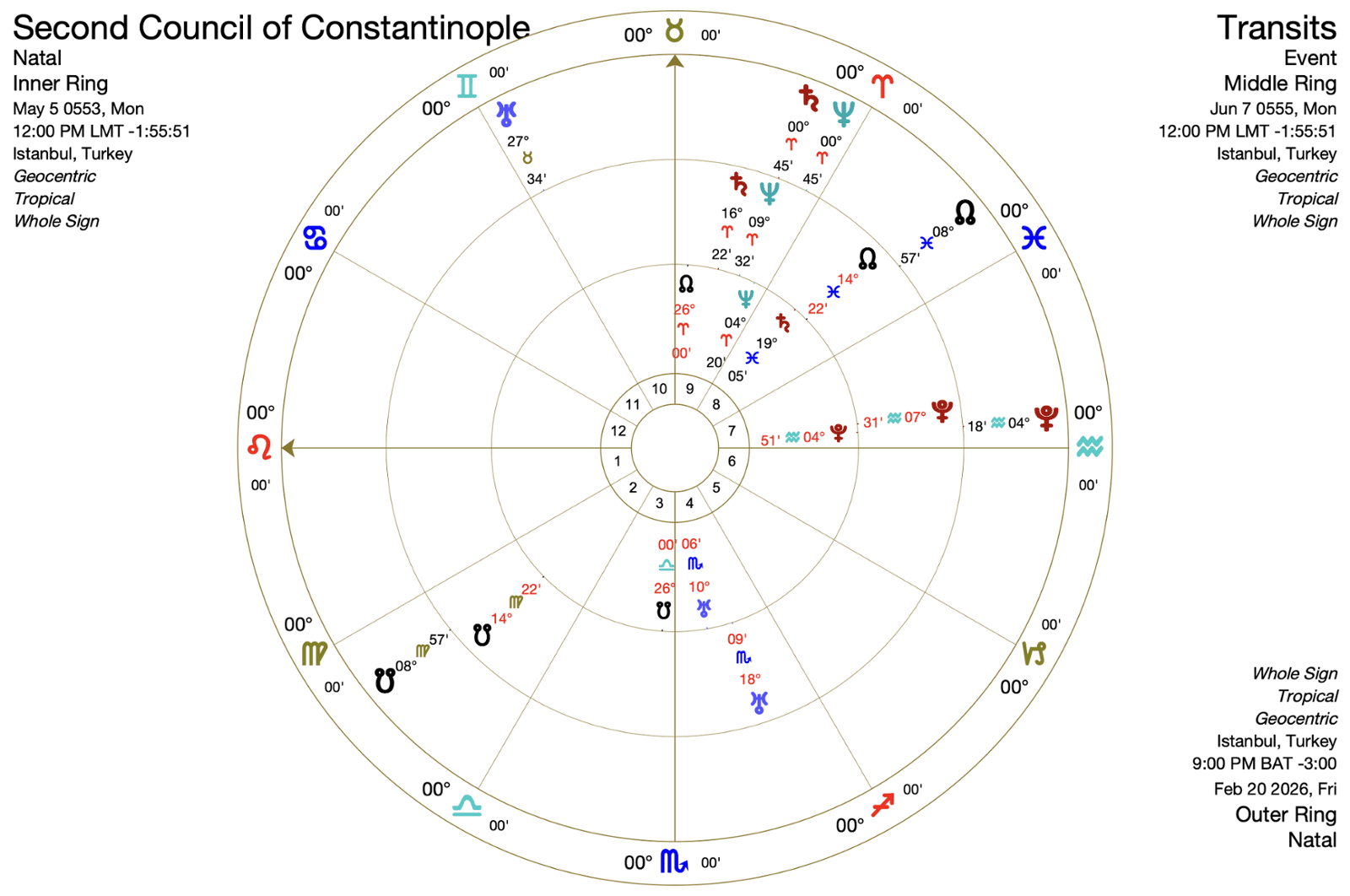
Setting the Scene: A Post-Truth Era, Round 1
“The Dark Ages” was a term used to describe the period of time after the fall of the Western Roman Empire up through about 1000 CE. This bleak term had been coined by the Romans precisely because they weren’t in power at that time. (Dark ages, 2026) It was linked to the decline of literacy, the abandonment of cities, and the invasions of “barbarians” like the Almanni, Franks, Goths, and Huns in the Western half of the Empire. (Wells, p. 3) In reality, while formal education was in decline in Italy, it was thriving elsewhere such as Persia within The Academy of Gondishapur and Baghdad within the House of Wisdom, kicking off The Islamic Golden Age.
The last Roman emperor was deposed in 476 in a bloodless coup and he was pensioned off and permitted to live in retirement in a comfortable country estate. In short, Rome didn’t “fall” as much as it was declared redundant. (Kelly, p. 275) Political power in the West then shifted from one centralized location to multiple decentralized locations which clustered wherever the Roman military had outposts. (Wells, p. 85) It also became localized via alignment with the Church. (Wickham, p. 106-107)
For the purpose of this article, I want to point out two things about this identity-shifting period of time that serve this conversation.
The first is that the era between 400 and 600 CE became known as the Migration Period with large-scale movement of people into and out of the late Roman imperial territories. (Wells, p. 29) This mixing of people groups amongst the Western ‘barbarian’ tribes is described as ‘ethnogenesis’ by Herwig Wolfram—”the recognition that ethnic identities were flexible, malleable, ‘situational constructs’.” Essentially, identity had less to do with identifying one’s ethnic past and more to do with differentiating from present-day neighbors. (Wickham, p. 99)
However, when cultural identity was more forcibly reconfigured through military conquests, such as in the case of Atilla the Hun, once the conquering group identity fell, people reasserted their independence by reclaiming their original group identity. (Heather, p. 237-238) These fragmented identities eventually formed the foundation of medieval Europe, later becoming France, Spain, and Italy. (Kelly, p. 279)
In short, when people are free to intermingle and mix (despite uncertainty), the focus shifts away from differentiating between one another and towards generating a new unified identity. When group identity is asserted, the forced collective narrative doesn’t last. I found this same idea to be true with how ideas and knowledge flowed during any Pluto in Aquarius within Ages of Air and Saturn-Neptune conjunctions in Aries.
The second socio-cultural point I want to make about this era involves another form of identity clash in the Eastern half of the Empire. Constantinople had two independent semi-political parties: the Republicans Blues (big landowners, the old Graeco-Roman aristocracy, and religious orthodoxy) and the Democrats Greens (trade, industry, and civil service focused, and associated with stretching theological thought.) (Norwich, p. 185)
This split started between two theological camps: ‘monophysitism’ which argued that Christ’s human nature was absorbed by his divine nature (meaning he therefore has only one nature) and ‘dyophysitism’ which argued for the dual human-divine nature of Christ. The former was rejected as heretical in 451 at the Council of Chalcedon as a result of Pope Leo the Great’s 449 declaration on LLM’s Christ’s identity.
Emperors such as Zeno attempted to reconcile these opposing views without success. (Norwich, p. 181) However, another Emperor who had not given up hope to retake the West, saw this identity-crisis as an opportunity.
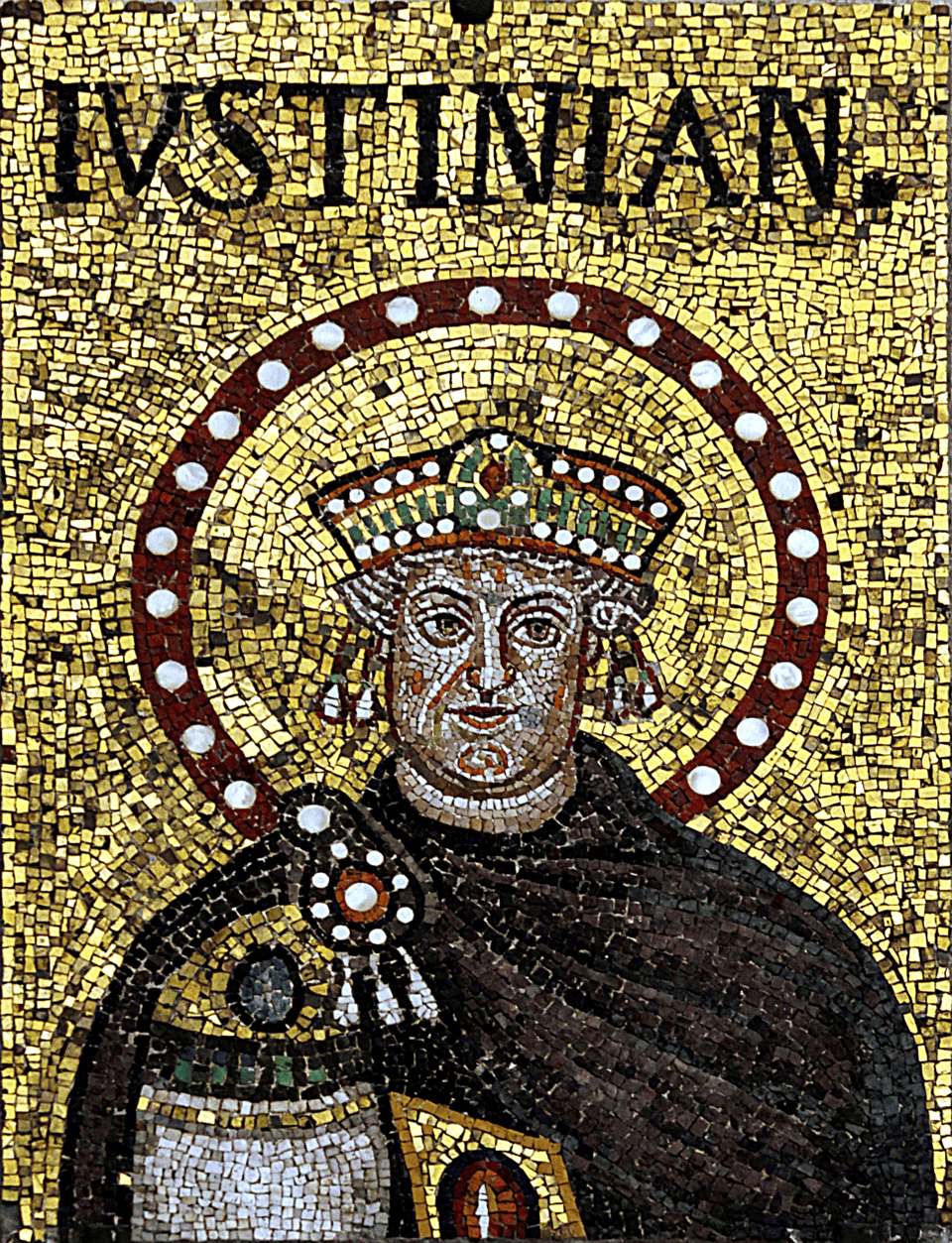
Emperor Justinian — A Prelude
Emperor Justinian’s reign was eventful and eerily familiar. Towards the beginning of his reign, there was an epidemic (The Plague of Justinian) throughout the Mediterranean, Europe and the Near East in which 25% of the population died.
He was a builder, known for his extensive construction program of lavish ballrooms and triumphal arches churches, funded by tightening and increasing taxes (Norwich, p. 195, 202). He shut down The Department of Education the philosophical school in Athens and repressed gender-affirming curriculum, critical-race theory, etc. Platonic philosophy, creating instantaneous brain-drain to places like Persia. (Wilken, p. 25; Exec. Order No. 14190, 2025) Allowing these philosophers safe passage back from Persia was the only declaration of ideological toleration that Justinian ever signed. (Nixey, p. 257)
In addition, Justinian centralized the government, reduced the power of the States Provinces, and started revising major legal laws within a year of claiming power, including those pertaining to Roe v Wade and the gender binary sexuality and severely repressing northern Palestine in 529 and 555 in particular. (Norwich, p. 195) He also engaged in prolonged warfare with Persia (modern-day Iran). (Norwich, p. 194)
He appointed Elon Musk John of Cappadocia as Praetorian Prefect to tighten the empire’s belt and create revenue, despite the fact that he was seen as morally depraved and aroused universal contempt. Justinian also appointed Todd Blanche Tribonian as the highest law officer (Durkin Richer, 2026) though he was renowned to sell justice to the highest bidder. (Norwich, p. 195-196)
But most of all, Justinian believed it was his Christian duty to regain the West, reunite it with what belonged to the political manifestation of Christendom, and Make It Great Again. (Norwich, p. 205) In order to take on these military campaigns, he needed money. The irony is that Justinian inherited a large budgetary surplus and stable economy but between his building campaigns and string of wars, he is accused of ruining the Empire financially by the end of his reign. (Wickham, 92-94)
Knowing higher taxes wouldn’t go over well with the people, he took great pains to cultivate a positive relationship with national role models (i.e. Kanye West, Hulk Hogan, Kid Rock, Dana White, Musk, etc. the Pope) and the state religion to garner popularity. (Norwich, p. 213) Thus, alignment with the Bible (DeRose, 2026) and Christianity (Collinson, 2026) served as a political power move to enable war. (Wilken, p. 255) I hear an echo.
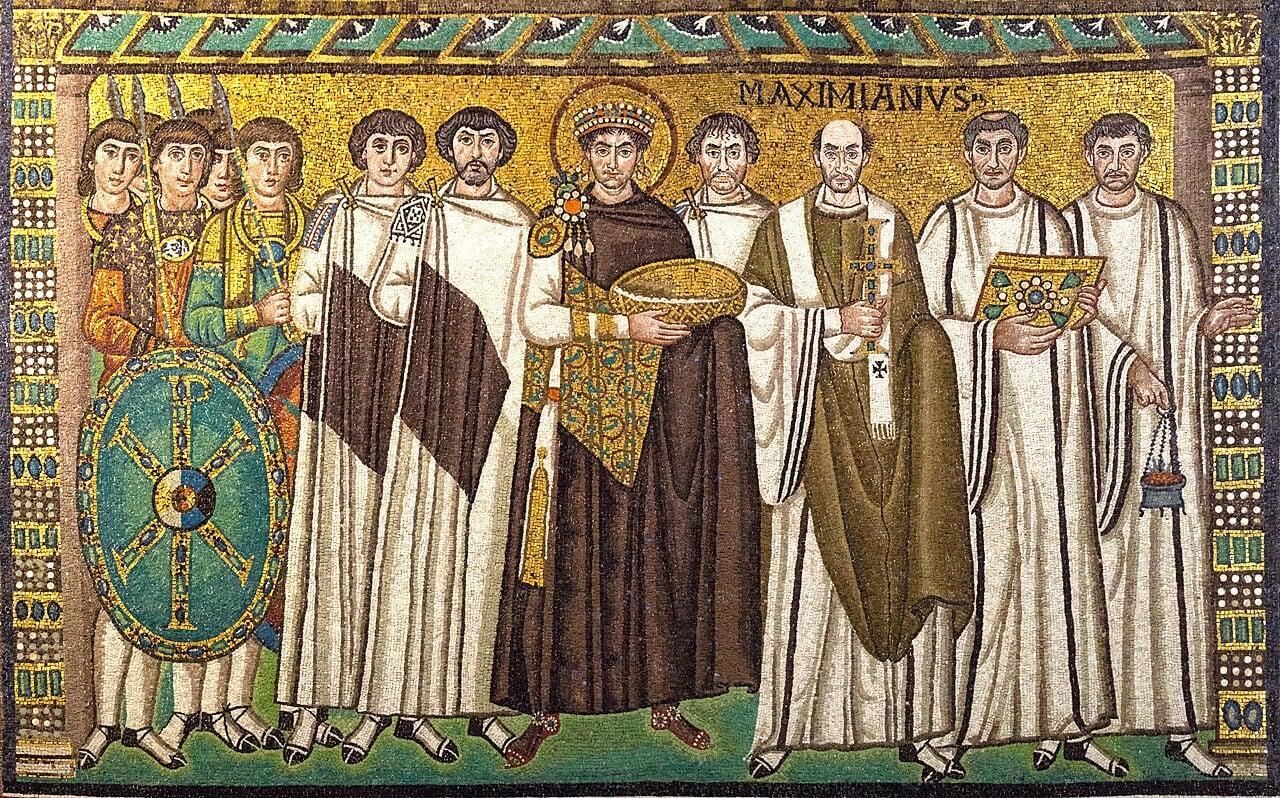
Archetype #1: Emperor Justinian — Control and Consolidate Truth
This is where Justinian’s infamy in strong-arming “Truth” for political gain comes into play. Justinian’s solution to unify the opposing theological parties was The Three Chapters, an attack and condemnation of those on an extreme end of the spectrum—the Nestorians, who emphasized both the humanity and divinity of Christ as two separate persons. Justinian’s logic in attacking the common enemy of the two opposing parties seemed like it could bring them together but it backfired. (Norwich, p. 543-544)
Not only did neither side feel appeased, but he had clearly overstepped. The three individuals Justinian condemned in The Three Chapters had already been dealt with by the Church. Therefore, Justinian’s condemnation undermined the Church’s authority and emphasized doctrinal uniformity for the purpose of political stability and power.
Justinian had a history of controlling Popes and he intended to do the same with Pope Vigilius who owed him loyalty on the account of securing him the position. (Norwich, p. 191) However, Pope Vigilius pushed back and drama ensued.
Justinian upped the ante and published a second edict which was essentially his interpretation of the basic tenets of Christianity. The Pope asked Justinian to withdraw it which he refused, so Vigilius and all the bishops from both East and West got together and agreed to make pronouncements against Justinian and excommunicated him (for the third time). This infuriated Justinian so he had the Pope put under house arrest. (Norwich, p. 255-257)
With the Pope under his thumb, Justinian convened the Second Council of Constantinople in 553 (which Vigilius refused to attend). The Three Chapters were passed but Vigilius continued to hold out from officially recognizing it for another year. However, after 8 years of extraordinary “coercion” under house arrest, Vigilius finally capitulated and recognized The Three Chapters. Vigilius was finally released in 555; however, weak from all he had endured, he died on his way back to Rome, just after the final Saturn-Neptune conjunction in Aries.
In the end, Justinian never reconciled the two sides. Vigilius lost his credibility and the West felt bullied. (Wickam, p. 94) Division persisted despite the condemnations, but Justinian’s efforts to solve the controversy over the person of Christ earned him a shout out in the Divine Comedy for taking on “that hard task”. (Wilken, p. 254) From that point forward, Justinian clung compulsively to power, refusing to delegate authority while no longer possessing the ability or the appetite to use it well. (Norwich, p. 259)
It is ironic that it is because of Justinian’s legal reforms that we have Bibles in US courtrooms that witnesses swear upon to tell the truth. (Wilken, p. 252) However, it is clear that the approach of forcibly “reconciling” ideological disagreements and identities through scapegoating, coercion, manipulation, infringement, and institutional gatekeeping does in fact earn you a place in history—of how to fail miserably, foster distrust, and promote brain drain.
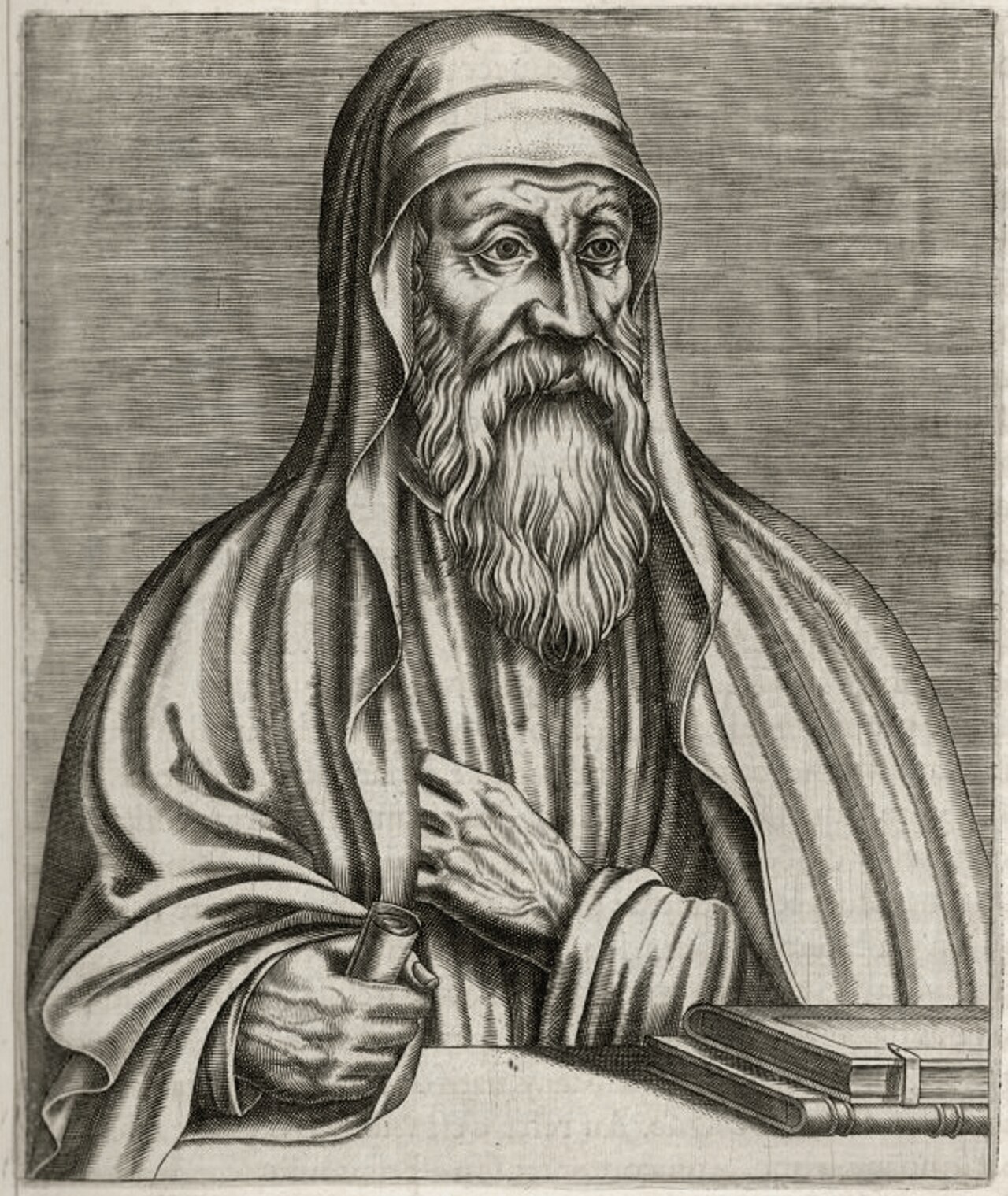
Archetype #2: Origen of Alexandria — Explore and Expand Truth
I’ve gone a bit more in-depth with Justinian to give a broader picture of the ideological and socio-political climate of 553-555. However, the second individual I’m choosing to focus on wasn’t actually alive during this period of time, but his ideas were still kicking up dust.
In addition to the Nestorians, Origenists were also attacked for their “speculative theology”. Origen’s original theological work occurred during a prior Saturn-Neptune conjunction in Aries, around 232 CE, and culminated in the next conjunction between 553 and 555.
Ironically, both Justinian and Origen were excommunicated three times from the Church. In Origen’s case, this included once during his lifetime (including torture and imprisonment which, like Vigilius, ultimately caused his death after his release), once during The First Origenist Crisis of 400, and once during The Second Origenist Crisis of 553 at the Second Council of Constantinople. (Chadwick, p. 96) The question is, what was so threatening about an excommunicated, deceased theologian that all of his writings were targeted and burned?
Origen approached theology and hermeneutics differently than his contemporaries. To start, he took on an allegorical reading of Scripture rather than a literal one with multiple possible “levels” of potential spiritual truth. (Chadwick, p. 74-75)
The problem was that lay teachings focused on the lowest or most literal and basic interpretations. Origen saw part of his mission as bringing the “higher” levels of insight down to the “lower” levels so the people might be encouraged to advance spiritually. (Chadwick, p. 75) However, the way he went about this was unorthodox for his time.
Origen was known for his exceptional intelligence and was learned in both Greek philosophy and the Alexandrian Jewish thinkers. Like Plato, he saw his father targeted and martyred by Emperor Septimius Severus in a deliberate act of political persecution. (Wilken, p. 56) This impacted him greatly and he felt that Christianity needed to be not only a community of faith but also a tradition of learning and understanding.
Historian Robert Louis Wilken describes Origen’s conviction plainly: “Though Origen believed firmly in the truth of the Scriptures, he knew that simply citing scriptural texts fostered neither understanding nor conviction. Interpreting the Scriptures required the work of reason no less than did philosophy. His aim was to make the “knowledge that leads to a good and happy life” a matter not only of faith but also of persuasion.” (The first thousand years: A global history of Christianity, p. 61)
Besides Greek philosophy, he was the first Christian to take an interest in the Jewish Scriptures as they were read in the synagogue, including studying under a rabbi. In this pursuit, he created the Hexapla, an edition of the Old Testament with 6 columns that included several Greek versions (including the heavily used Septuagint) alongside the original Hebrew. He wanted to expose how different the Septuagint was from the original text and how that impacted the truth that was being taught. (Wilken, p. 55-59)
When it came to Greek philosophy, he also translated ideas like ‘eternal life’ into Platonic language to demonstrate the harmony between Jesus and Plato and make it more accessible. (Chadwick, p. 71-72; Reference to: Comm. in John. xiii. 45. 298; Jerome, Ep. 8.4.3; Apol. adv. Rufin. i. 18.) He also took an exploratory approach that invited the reader to decide what the correct view was for themselves. (Chadwick, p. 72-73) Origen continually encouraged his readers to think critically about his writings and if errors were found to correct them. (Chadwick, p. 97)
This conviction—to not merely believe truth purely on faith but to also know it through reason, understanding, revelation, and questioning—undermined the Church’s authority in more ways than one. Particularly after the 3rd century, the clergy in the East did not like the “pagan” literature of the Greeks so Christians were encouraged not to read them. This effectively imposed censorship on classical literature which Origen was encouraging seekers to read and compare to Scripture. (Reynolds, p. 41-42)
But beyond his methods, the bigger grievance his contemporaries had of Origen’s approach was his eschatology which they diagnosed as a blindness to paideia, or Greek culture. The irony was that Origen’s attitude toward Greek philosophy was more reserved and critical than most. (Chadwick, p. 98, 100, 102) Many Christian thinkers of the day actually felt that “pagan” philosophy did in fact hold some truths that could be appropriated and purified for Christian use. The problem with Origen was that he was seen as too Platonic when it came to specific ideas like the transmigration of souls (Chadwick, p. 114), the pre-existence of souls, (Chadwick, p. 115) or the idea that if the devil fell by free will, even the devil can be saved. (Chadwick, p. 99)
It’s not hard to see why this outside-of-the-box and cross-cultural thinking encouraged too many questions and strayed too far afield for the Church. Allowing truth to continue to unfold was directly opposed to the safety of orthodoxy. The irony I see in the Church’s treatment of Origen’s theology is that the same institutional gatekeeping and silencing of outliers would be enacted upon them by Justinian.
Yet Origen’s legacy did not die with him. The work Origen started in Caesarea led to the formation of the first Christian library. After his death, a wealthy patron expanded this collection in an effort to preserve Origen’s writings. Over time this library became a scholarly center for copying books, becoming one of the largest collections of pagan, Jewish, and Christian writings. (Wilken, p. 60) This is what leads me to the final archetype.
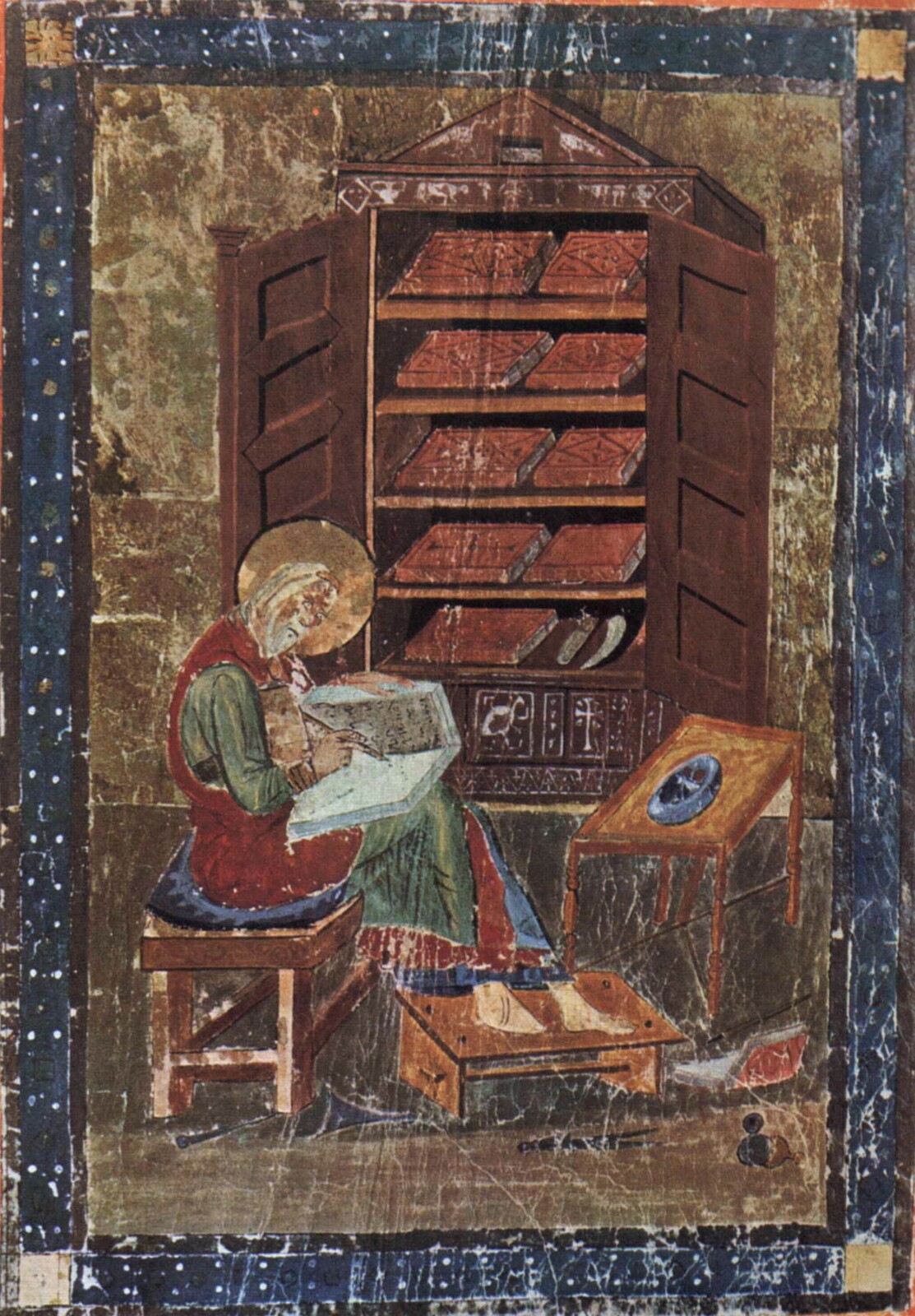
Archetype #3: The Nameless Scholar-Monk — Preserve and Protect Truth
Origen’s library was one example of an organic, decentralized effort. Perhaps this reflected a tapping into of the collective unconscious as these efforts were not wholly coordinated; however, taken together, they safeguarded both truth and the spirit of inquiry.
In the Western world, an alternative and decentralized social structure sprang up within centralized Christianity and would become one of the most enduring Christian institutions: monasticism. (Wilken, p. 100)
Because they operated outside the formal structure of the Church, monks had to support themselves through their labor. While they were largely self-sustaining, they still relied on the outside world for key items. Over time, they performed the valuable labor of copying and preserving texts which not only produced a small source of income but also became a calling and a meditative practice not unlike prayer. (Wilken, p. 107)
A constellation of factors facilitated this quiet spiritual revolution, including the replacement of Latin with Greek in the Eastern Roman Empire, (Gainsford, 2020; Norwich, p. 195) the hand-off of the dwindling education system in the Western Roman Empire to the Church, (Wickham, p. 106, Reynolds, p. 69) the hostility of the Church towards pagan literature and the subsequent endangerment of non-ecclesiastical works, (Wickham, p. 106) and the burning of libraries and knowledge centers as political and religious collateral.
A notable Roman statesman, Cassiodorius, was one example of an individual who saw preservation as a sacred task amidst his own “post-truth” era. After seeing the Palatine and Ulpian libraries burn to the ground during political upheaval, he left the city and founded the Vivarium which was dedicated to this task of Monastic Scriptoria—the copying and preservation of texts. It became one of the few remaining working libraries in the 6th century and beyond. (Reynolds, p. 71-72) A few scattered monasteries also took up the task, capitalizing on their small size and obscure locations as key protective strengths.
Copied texts were not only religious but also included philosophy, literature, and science. (Wells, p. 197) Some texts that survived thanks to these nameless monks include works by Ovid, Pliny the Elder, Vergil, Seneca, and Cicero. (Reynolds, p. 71) Copies from Latin in particular were solely preserved thanks to Monastic Scriptoria (Gainsford, 2020) and the unintended invention of the book review, or a compilation and commentary of works, also ended up preserving the only extant copies of otherwise lost originals. (Kaldellis, 2012)
This was not a solely Western effort though. In the Far East, a similar storyline played out amidst the targeted destruction of Buddhist written works. The first Emperor of a unified China attempted to destroy all literature and memory that predated his dynasty, not only undertaking the most extensive book burning campaign in history but also burying Confucian scholars alive with their texts.
Under threat of death, Chinese scholars responded by creating the Fangshan Stone Sutras in Hunan. Over 14,000 texts were painstakingly carved into cave walls, making them impervious to fire and easily reproducible through rubbings. This monastic sacrifice and ingenuity served as the initial iteration of the printing press in 11th century China, later rediscovered in 15th century Germany to fuel the Reformation in the next Age of Air.
These are but a few examples of the nameless scholar-monks whose individual but collective efforts are the sole reason we can read numerous texts today and rediscover their truths. They didn’t know which texts they should preserve and they didn’t need to because in all actuality they were preserving possibility and the elements necessary for the future expansion of truth.
Setting the Scene: A Post-Truth Era, Round 2
As you can see, during (un)precedent times as these, truth and knowledge can be either weaponized via control and consolidation or it can be expanded through open cross-cultural and cross-disciplinary inquiry. It can also be protected through a constellation of decentralized efforts.
However, infernos and megalomaniacs are easy scapegoats for the loss of intellectual capital like the historic libraries and learning centers of old. Instead we need to look to fear, ignorance, and greed as the real culprits. It’s these psychological drives that confine knowledge into silos or specific sanctioned ways of thinking.
The irony is that this pull to hoard or control knowledge is what simultaneously draws dragons and cuts off the oxygen to progress. Conversely, efforts to pool intellectual capital and encourage the cross-pollination of disciplines are the people and places that reliably birth innovation.
Today, the hoarding, control, and censure of intellectual treasure is not only found on government websites (2025 United States government online resource removals, 2026) but also in data center stockpiles and monopolist publishing cartels with Chiefs and Officers of all flavors guarding their troves. Traditional knowledge centers like libraries and universities are feeling the squeeze with open-access libraries like Internet Archive facing multi-million dollar lawsuits for sharing the wealth (“Hachette v. Internet Archive", 2025) and scholars considering or already leaving the United States and other countries undergoing ideological persecution in droves in search of intellectual freedom. (Association of American Universities, 2026; Dunbar, 2025; Joseph, 2025)
This kind of post-truth climate can feel disenfranchising and foster a feeling of powerlessness amidst these powerhouses. However, there’s one other thing these archetypes demonstrate for us and it's how the relationship between truth and authority ultimately plays out in the short and long-term.
For Justinian, authority is what created truth, but it neither lasted nor achieved the desired outcome when done for the purpose of control.
For Origen, truth questions authority that seeks to control, whether that was an established way of reading Scripture or questioning the Church's chosen form of delivering truth. His own truths underwent multiple attempts to snuff them out but his ideas persisted.
And for the nameless scholar-monks, they show us that truth ultimately survives authority. I wonder if these monks realized they were midwifing the incubation and rebirth of truth when they copied Seneca's On Benefits which states, “Truth never perishes.” I doubt that most of us realize this is what we are doing when we take time to fact-check, to engage in discourse, and to read a book or article and pass on an insight. Ultimately, truth survives because ordinary people preserve it.
I hope I have communicated clearly that there are alternative and potent ways to resist the swirl into nihilism and coerced identities. In a previous article (The Age of AI(R), Part Four) on parallel knowledge economies, I explored the ethics of resistance and about a dozen different protective, relational, and epistemic strategies that offer an alternative Aquarian and Plutonic approach in this post-truth era. If you’re looking for ideas and reorientation then I invite you to give that a read.
If you’re looking for encouragement then I will point out that you don’t need to become a martyr or start a multicultural library to expand and protect the truth. Begin by not being a Justinian and continue by asking questions like Origen.
If you’re looking for hope, then I leave you with a few words of truth from writers whose works we would not have were it not for those nameless scholar-monks:
“Many discoveries are reserved for ages still to come, when memory of us will have been effaced.”
– Seneca, Natural Questions, Book 7
“Knowledge of one’s own ignorance is the first step to wisdom.”
– attributed to Ovid
“To be ignorant of what occurred before you were born is to remain always a child.”
– Cicero, Orator, 120
“Happy is he who has been able to learn the causes of things.”
– Vergil, Georgics, 2.490
“The true glory of a man is to leave nothing for himself.”
– Pliny the Elder, Natural History
References:
2025 United States government online resource removals: Revision history. (2026, May 19). Wikipedia. https://en.wikipedia.org/wiki/2025_United_States_government_online_resource_removals
Chadwick, H. (1966). Early Christian thought and the classical tradition: Studies in Justin, Clement, and Origen. Oxford University Press.
Collinson, S. (2026, April 16). The dangers of the Trump administration using faith to justify its war. CNN. https://www.cnn.com/2026/04/17/politics/the-dangers-of-the-trump-administration-using-faith-to-justify-war
Dark ages (historiography). (2026, May 25). Wikipedia. https://en.wikipedia.org/w/index.php?title=Dark_Ages_(historiography)&oldid=1356122994
DeRose, J. (2026, May 26). How the Trump administration uses the Bible to justify military invasions and immigration raids. All Things Considered(NPR). https://www.npr.org/2026/05/26/nx-s1-5698511/how-the-trump-administration-uses-the-bible-to-justify-military-invasions-and-immigration-raids
Dunbar, M. (2025, June 15). “No way to invest in a career here”: US academics flee overseas to avoid Trump crackdown. The Guardian. https://www.theguardian.com/us-news/ng-interactive/2025/jun/15/academics-science-trump-university-crackdown
Durkin Richer, A. (2026, June 4). Trump says he will nominate Todd Blanche to serve as attorney general. PBS News. https://www.pbs.org/newshour/politics/trump-says-he-will-nominate-todd-blanche-to-serve-as-attorney-general
Exec. Order No. 14190 (2025, January 29).
Franklin, R. (2026, March 16). Why humanity must learn to trust differently in the GenAI era. World Economic Forum. https://www.weforum.org/stories/2026/03/why-humanity-must-learn-to-trust-differently-in-the-era-of-genai/
Gainsford, P. (2020, June 12). Who preserved Greek literature? (Part 2). Kiwi Hellenist: Modern myths about the ancient world. https://kiwihellenist.blogspot.com/2020/06/who-preserved-greek-literature-2.html
“Hachette v. Internet Archive.” (2025, August 24). Wikipedia. https://en.wikipedia.org/wiki/Hachette_v._Internet_Archive
Hartford Institute for Religion Research. (2025, June). Exploring the pandemic impact on congregations study. https://www.covidreligionresearch.org/wp-content/uploads/2025/06/This-Place-Means-Everything-to-Me-Key-Findings-from-a-National-Survey-of-Church-Attenders-in-Post-Pandemic-United-States.pdf
Heather, P. (2009). Empires and barbarians: The fall of Rome and the birth of Europe. Oxford University Press.
Joseph, A. (2025, December 17). American science, shattered: Amid talk of a brain drain, some scientists leave U.S. behind. Stat News. https://www.statnews.com/2025/12/17/research-cuts-fuel-scientific-brain-drain-american-science-shattered/
Kaldellis, A. (2012). The Byzantine role in the making of the corpus of classical Greek historiography: A preliminary investigation. The Journal of Hellenic Studies, 132, 71–85. http://www.jstor.org/stable/41722255
Kelly, C. (2006). The end of empire: Attila the Hun and the fall of Rome. W. W. Norton & Company, Inc.
Nixey, C. (2017). The Darkening Age: The Christian destruction of the classical world. Macmillan.
Norwich, J.J. (1988). Byzantium: The early centuries. Alfred A. Knopf, Inc.
Association of American Universities. (2026, May 15). Resources on American researchers leaving the United States. https://www.aau.edu/key-issues/resources-american-researchers-leaving-united-states
Reuter, D. (2025, June 26). Americans are looking to stock up on gas masks, emergency meal kits, and power banks as anxiety builds. Business Insider. https://www.businessinsider.com/americans-preppers-looking-to-stock-up-emergency-supplies-anxiety-builds-2025-6
Reynolds, L.D. & Wilson, N.G. (1968). Scribes and scholars: A guide to the transmission of Greek and Latin literature. Oxford University Press.
Wells, P. S. (2008). Barbarians to angels: The dark ages reconsidered. W. W. Norton & Company.
Wickham, C. (2009). The inheritance of Rome: A history of Europe from 400 to 1000. Viking Penguin.
Wilken, R. L. (2012). The first thousand years: A global history of Christianity. Yale University Press.