A Mad Scientist's Advice
For the last several days, I’ve had Emmet “Doc” Brown from Back to the Future in my head saying his famous eureka phrase, “Great Scott!” over and over again. It was completely random and seemingly nonsensical—until now.
I’ve been reflecting on how the February 17 (sidereal and tropical) Solar Eclipse in Aquarius coincides with both Ramadan and the Chinese Lunar New Year—and the Year of the Fire Horse. That’s a lot of trans-regional, cross-cultural, and intra-religious convergence on the same date. Something seemed to be aligning, but I couldn’t quite put my finger on it…until an image of Doc Brown and a wagon careening off a cliff popped into my head. Then one of the most Aquarian characters I could think of said it again: “Great Scott!”
The Chinese Fire Horse
I recently attended a Kepler College webinar with Donna Stellhorn, a western astrologer who is also fluent in Chinese Astrology. Her explanation of the character of the Fire Horse was vivid: the horse pursues connection and is fast, but you have to have a goal or a direction because once the horse starts running, it keeps going—even off a canyon if you’re not careful.(1)
We are exiting the Year of the Wood Snake (signifying either excessive caution or the need for it). While envisioning this transition from snake to horse, I realized if a snake makes any sudden movements, it can spook a horse and trigger it to run wildly out of control—even to its peril. This immediately brought to mind the beginning of Back to the Future III(2) when Doc Brown rushes to save Clara Clayton before her spooked horses throw her and the wagon into the canyon. In the process, he not only alters the future but unexpectedly falls in love with the woman who would have been the tragic namesake of Clayton Ravine.(3)
Stellhorn’s point was quite clear. Be strategic and keep sight of the goal, because we’re about to move fast. As a herd animal, it’s important to know where the herd is going so you can discern whether you need to break away. Horses are highly social, so being part of a group and making connections is important this year—but belonging to a group does not absolve individual responsibility (the Epstein files anyone?)
Ramadan and the Leo-Aquarius axis
Elements of this dynamic are currently playing out in the Middle East as the UAE and Saudi Arabia disagree about the start of Ramadan. It’s important to understand that the beginning of the month in the Muslim lunar calendar is marked by the first sighting of the crescent moon after sunset on the day of the New Moon conjunction—not the exact astronomical moment when the Moon conjuncts the Sun.(4)
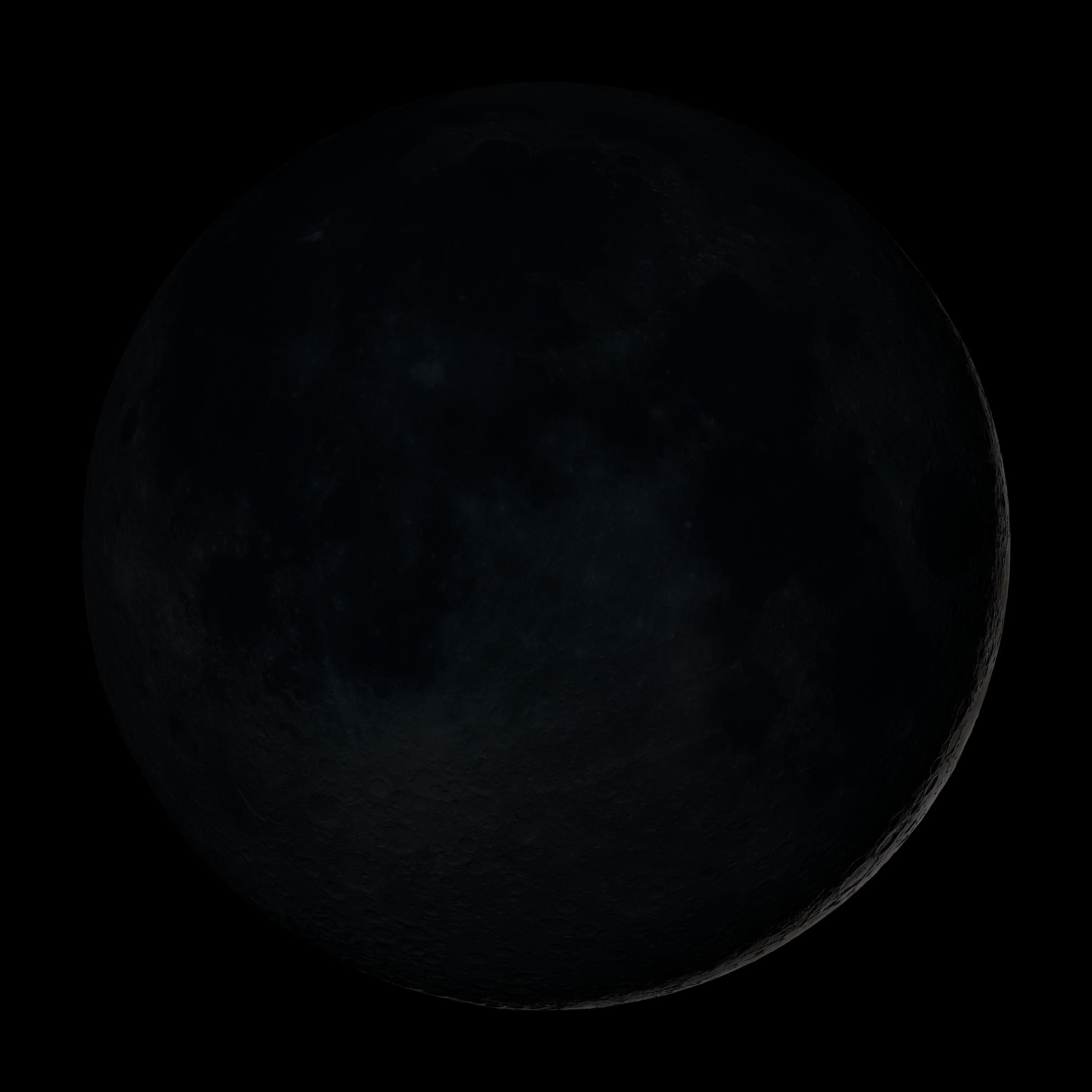
A tension is emerging between the desire for a scientifically exact calculation that unifies the Muslim community under a single date and the cultural and spiritual meaning of the first lived sighting of the crescent Moon—which may vary depending on your location.
There have been instances in the past when countries have broken away and observed Ramadan on different days. SAASST has announced the 19th is the start of the month. We will see which date the UAE ultimately follows, but the growing push to rely less on a centralized authority and more on localized observation feels unmistakably Aquarian.
Ramadan is a month of fasting, prayer, meditation, and communal purification. Philosophically and astrologically, purification is linked to fire. The word Ramadan itself means “scorching heat” or “burning” and commemorates the revelation of the Qur’an to the Prophet Mohammed.(6) This year’s observance appears to mirror the decentralized and collective element of this Aquarian eclipse, infused with its own fiery undertones.
But the correlations don’t stop there.
A Vedic Fire Horse
I don’t know whether he intended the timing, but my Vedic astrology teacher, Aswin Subramanyan, recently posted a blog note about the controversy surrounding the appearance of the horse in the Rig Veda. He explains that critics have argued that because horses are not native to India, this implies the Vedas were composed outside India, in regions where horses were common.(7)
This argument has long supported the colonial-era dating of the Rig Veda to around 1500 BCE. Yet geographical references within the text, along with archaeological discoveries, point toward authorship within the Indian subcontinent.
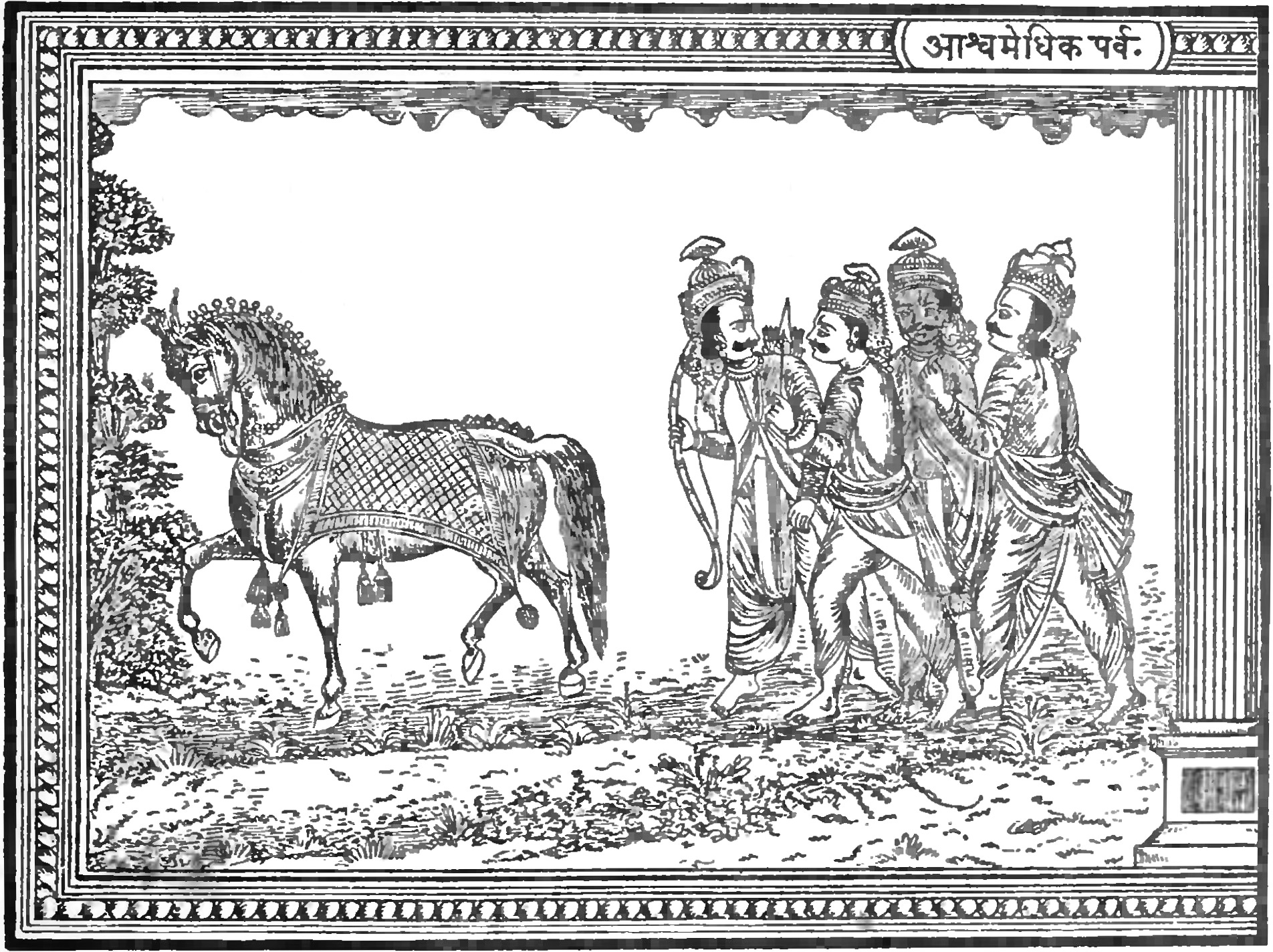
Aswin points to Vedveer Arya’s research which notes that the Rig Veda describes a 34-ribbed horse. The modern horse has 36 ribs, but fossil remains of horses that may have had a 34-rib structure have been found in the Shivalik region of India.(8) The challenge? These remains date to approximately 8000 BCE—at least 6,500 years earlier than the commonly accepted date of composition of the Rig Veda.
This Vedic “Fire Horse” is an example of tangible evidence that purifies and enlightens old, centralized ideas. While I’ve discussed aspects of this with Aswin, I speak only for myself when I say: I see where the herd is headed, and it’s time to jump off the wagon.
“Roads? Where we’re going, we don’t need roads.”
Aswin and a classmate, SparklesofGold (Nicholas Polimenakos), also released a CAPISAR podcast episode that covered this tropical Solar Eclipse. They noted that it occurs in the final degrees of Aquarius—suggesting that something is simultaneously ending and arriving. The advice: don’t resist transition. Let go. Be willing to embrace something entirely new.(9)
Stellhorn also observed that this is the first of three consecutive Lunar New Years that fall on an Aquarian Solar Eclipse.(10) I think this February 17/18 eclipse may therefore signal the beginning of a sequence of fresh starts as part of a domino effect—both personally and collectively.
Collectively, the role of the scientific community provides a striking example. The scientific method aims to observe, test, and verify hypotheses. Yet we seem to be running into situations where data analysis reinforces confirmation bias rather than genuine iteration and knowledge generation. These hypotheses have turned into a hardened statue whose clay can no longer be reshaped.
Whether in astronomy, archeology, religious studies, or even time travel, if the overarching impulse is to protect a conclusion by dismissing phenomenology, is this still science? Lived experience and the totality of evidence need to inform conclusions and not serve as anomalistic data. Perhaps this present quality of time suggests that centralized epistemic authority needs to be challenged by localized observation and lived experience. Long-standing conclusions and institutions are no longer “too big to fail.”
Returning to Doc Brown in Back to the Future III, when he decided to break his own scientific rule about not interfering with time, he set off a chain of events—not just historically, but personally. Reconsidering both the nature of time and that the future is not yet written, opened the door to unexpected beauty and new beginnings for Doc Brown and Marty McFly.
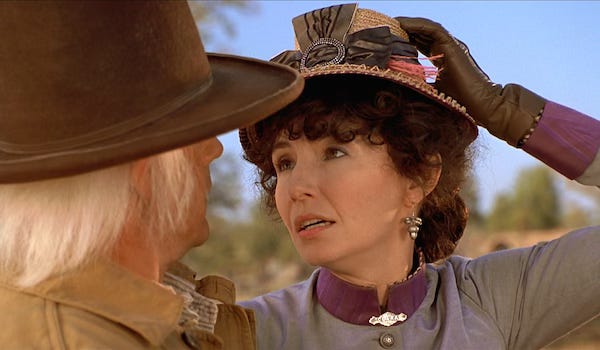
Breaking away from what no longer fits and choosing a new path with those we are truly aligned with doesn’t guarantee a time-traveling locomotive and an anachronistic family, but it may save us from ending up at the bottom of a canyon.
Horses, the fire element, and the Aquarian instinct to break away and innovate feel especially potent—perhaps even incendiary—this February 17/18/19. Yet the message appears to be very clear: if you don’t like where the herd is going, then hold fast to your authenticity and find one you can run with.
Footnotes:
Arya, Vedveer. (2025) Chronology and origins of Indo-European civilizations, Volume 1 and Volume 2. Aryabhata Publications.
Back to the Future III. (2026, February 15). Wikipedia. https://en.wikipedia.org/wiki/Back_to_the_Future_Part_III
Mulla, I. (2026, February 13). Ramadan moon sighting 2026: Will the UAE break with Saudi Arabia on start of holy month? Middle East Eye. https://www.middleeasteye.net/news/will-uae-break-saudi-arabia-ramadan-start-date-moon-sighting
Polimenakos, N. & Subramanyan, A. (2026, January 29). Astrological guide to February 2026. [Video]. CAPISAR Podcast.
Ramadan. (2026, February 15). Wikipedia. https://en.wikipedia.org/wiki/Ramadan
Setiani, U. E. B. (2022, March 27). Crescent moon sighting and its significance for Ramadan. Muslim Pro. https://www.muslimpro.com/crescent-moon-sighting-and-its-significance-for-ramadan/
Stellhorn, D. (2026, January 31). The fire horse: 2026 – galloping forward at full speed. [Webinar]. Kepler College.
Subramanyan, A. (2026, February 15). Reconsidering the horse in the Rig Veda. Aswin’s Astrology.https://www.aswinsubramanyan.com/post/reconsidering-the-horse-in-the-rig-ved